
This is the bridge between just “decoding” words and really learning from them.
You must approach this as an educator tracking how well your learner can extract meaning from different texts in both academic and real-world.
1. Narrative vs. Informational texts
Learners must switch reading gears depending on the text type.
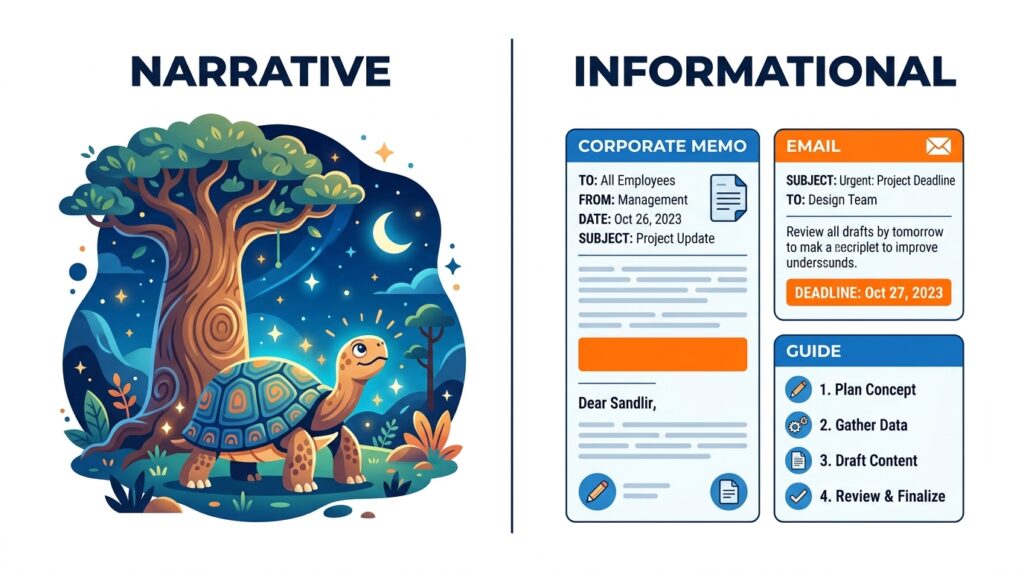
Narrative texts
Story-driven, chronological texts (novels, short stories, myths) rely on plot, setting, character motivation, and theme.
Informational texts
Fact-based texts to inform or instruct. In a school environment, these are often functional workplace documents.
| Document | Teacher’s Focus |
| Memos / Circulars | Teach learners to locate the sender, recipient, date, and core directive. |
| Emails | Teach learners to distinguish between formal and informal tones, and identify deadlines. |
| Manuals / Guides | Focus on the absolute necessity of reading step 1 before step 2. |
2. Reading Texts for Meaning
When teaching simple literary texts (poems, plays, folktales), the objective is to move the student from literal reading to interpretive reading.
Literal meaning
What the text states on the surface.
Deep meaning (Theme)
The underlying lesson or moral.
- E.g. In the tortoise folktales common in Nigerian curricula, the literal story is about a greedy animal, but the meaning is an ethical lesson on greed and its consequences.
Characterization
Teach learners to infer a character’s traits through their actions and dialogue rather than just relying on what the author says.
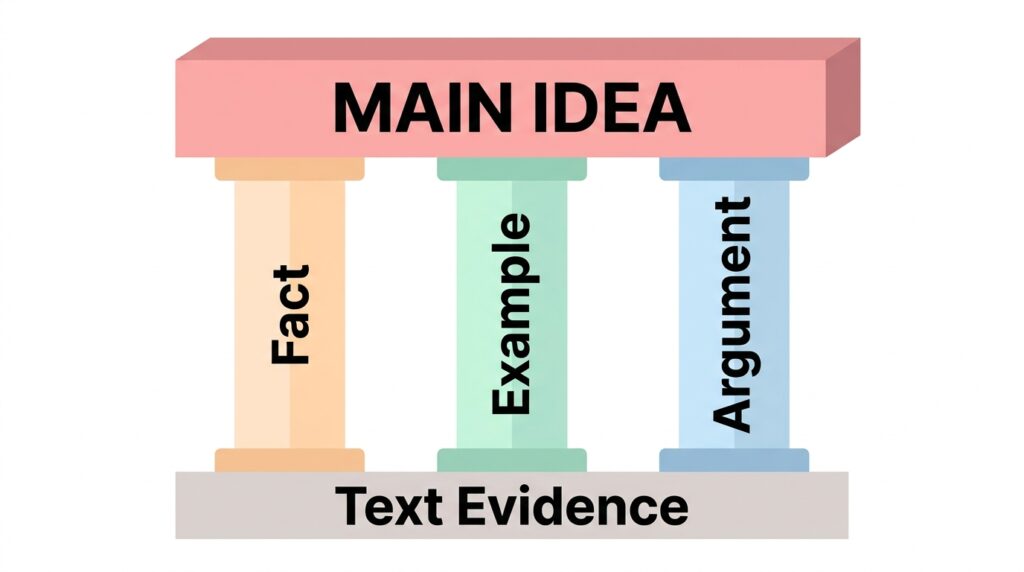
3. Main and Supporting Ideas
Main idea
The primary point the author wants the reader to understand. It’s often found in the topic sentence (the first or last sentence of a paragraph).
Supporting details
The specific facts, examples or arguments that back up the main idea.
Inference
This means reading between the lines.
And drawing a conclusion based on text evidence + prior knowledge.
The author doesn’t state it; the reader deduces it.

- Example: “Chidi walked into the classroom shivering, droplets falling from his uniform.”
- Fact: Chidi is wet.
- Inference: It is raining outside.
4. Interpreting Charts or Reports
This is graphical literacy, vital for subjects like Maths, Geography, and Agric Science.
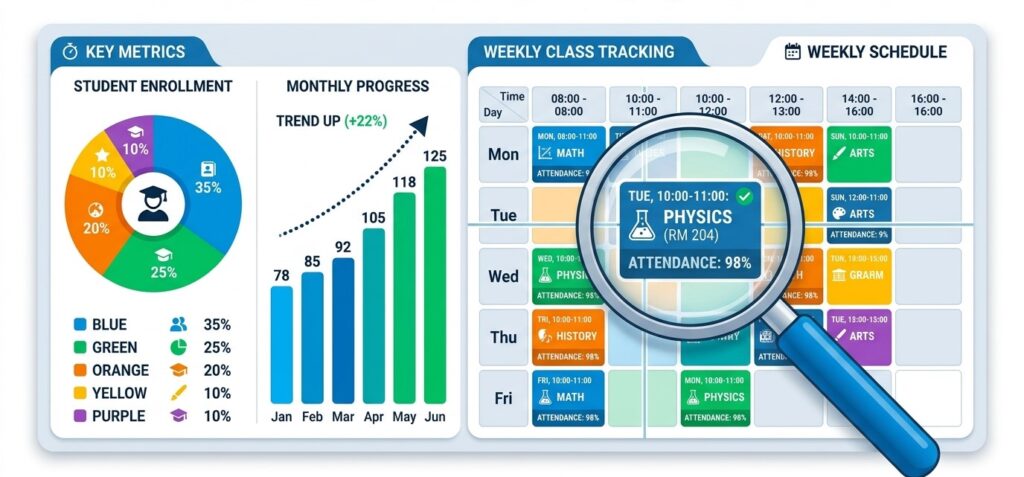
Timetables or Schedules
Require tracking data across intersecting vertical and horizontal axes. Train the students to locate coordinates fast.
Charts (Pie, Bar, Line)
Teach learners to look at the Title first, analyse the Legend/Key, and identify trends or the highest/lowest variables.
Short reports
Functional summaries often with text and basic data metrics. Students must learn to locate key data without reading the entire document.
5. Understanding Vocabulary in Context
Students cannot stop to look up every word in a dictionary while reading.
They must use “Context Clues” (surrounding words) to unlock meanings, especially with figurative language.
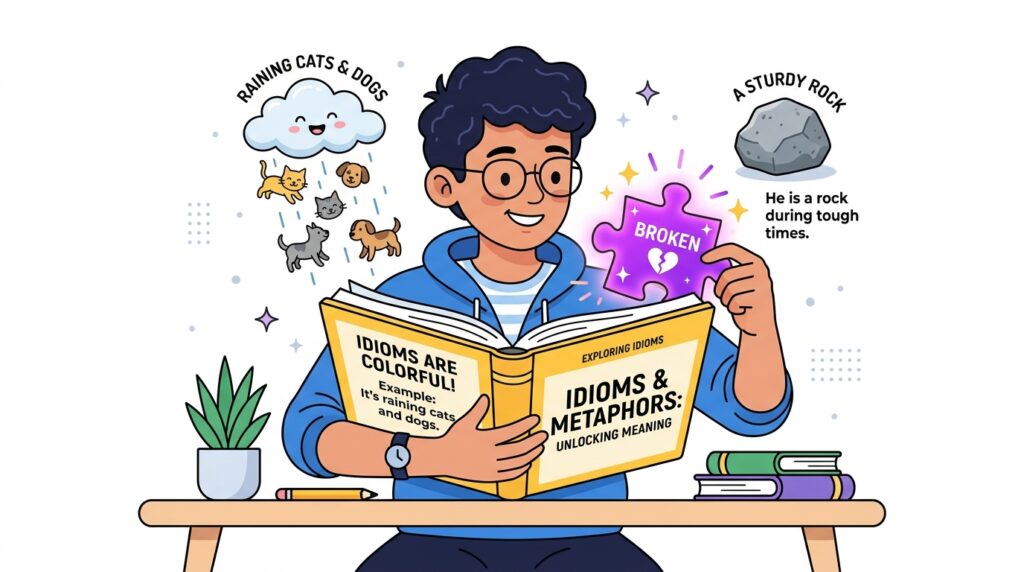
Idioms
Expressions where the meaning is not deducible from the individual words (e.g., “To beat around the bush” or “To rain cats and dogs”).
Similes
Indirect comparisons using “like” or “as” (e.g., “As stable as a rock”).
Metaphors
Direct comparisons without “like” or “as” (e.g., “The teacher was a rock during the crisis”).
Context clue strategies
Teach students to look for synonyms or antonyms in the sentence to figure out an unfamiliar word’s meaning.


Leave a Reply